
A new course has been introduced for third-country nationals already in Malta, focusing on Maltese culture and the Maltese language. The syllabus for this course was prepared by the Ministry for Home Affairs, Security and Employment, and it will be available to be offered by all licensed Maltese educational institutions. This course, for which […]
A new course has been introduced for third-country nationals already in Malta, focusing on Maltese culture and the Maltese language. The syllabus for this course was prepared by the Ministry for Home Affairs, Security and Employment, and it will be available to be offered by all licensed Maltese educational institutions.
This course, for which attendance is mandatory, also includes an examination. While applications can be submitted through the Identità portal, the exam will be coordinated by the Government's Examinations Department.
This course makes it possible for third-country nationals working in Malta to be granted a longer permit renewal. However, this will only be granted if the person is already trained, received training while in Malta, or has successfully completed this course and passed the examination.
This was a measure announced in the Malta Labour Migration Policy, aimed at introducing stability in the labour market, meaning that those who have been trained and have learned about Malta contribute more, as explained by Minister for Home Affairs, Security and Employment Byron Camilleri.
“Foreign nationals who come to work in our country have the obligation to adapt to us, and not the other way around. That is why we launched this course, as promised in the Malta Labour Migration Policy; they must also sit for and pass an exam to be considered, based on a number of other conditions, for a two-year permit instead of a one-year permit. In this way, we will have workers who are better trained and more adapted to Maltese society. This is the way forward; this is the path we have designed, implemented, and are now reaping the benefits of," stated Minister Camilleri. A worker employed in a role considered low-skilled must complete this training programme and examination, covering areas such as Maltese culture, traditions, civic participation, legal awareness, personal and professional development, and the learning of the Maltese and English languages, to be considered for a longer permit.
Meanwhile, if the employment is considered higher-skilled, the two-year extension is granted on the basis of training. Naturally, the period must always be covered by an employment contract. In specialised schemes such as the Key Employment Initiative (KEI), the Special Employment Initiative (SEI), and the Blue Card directive, renewals of up to three years can be made. A three-year renewal is also possible for someone who has obtained a higher-level skills card in tourism and has a three-year employment contract.
Licensed educational institutions wishing to offer this course must inform Jobsplus by sending an email to qa.jobsplus@gov.mt.
The syllabus and the assessment method can be accessed from this link- https://www.gov.mt/en/Government/DOI/Press%20Releases/PublishingImages/Pages/2026/03/27/PR260506en/PR260506b.pdf

Identità would like to inform employers, prospective applicants, and current clients that, as from 1 March 2026, the Pre-Departure Course certificate will be formally verified as part of the work permit application process for new and still abroad third-country nationals (TCNs). The Pre-Departure Course was officially launched on 5 January 2026 and forms part of […]

Malta continues to attract professionals across multiple sectors, increasing the importance of clear, well-structured migration and residence frameworks. This growth raises key operational considerations, including the appropriate application pathways, common causes of processing delays, and the role Identità plays in ensuring that visa and residence procedures are administered efficiently, securely, and in line with national […]
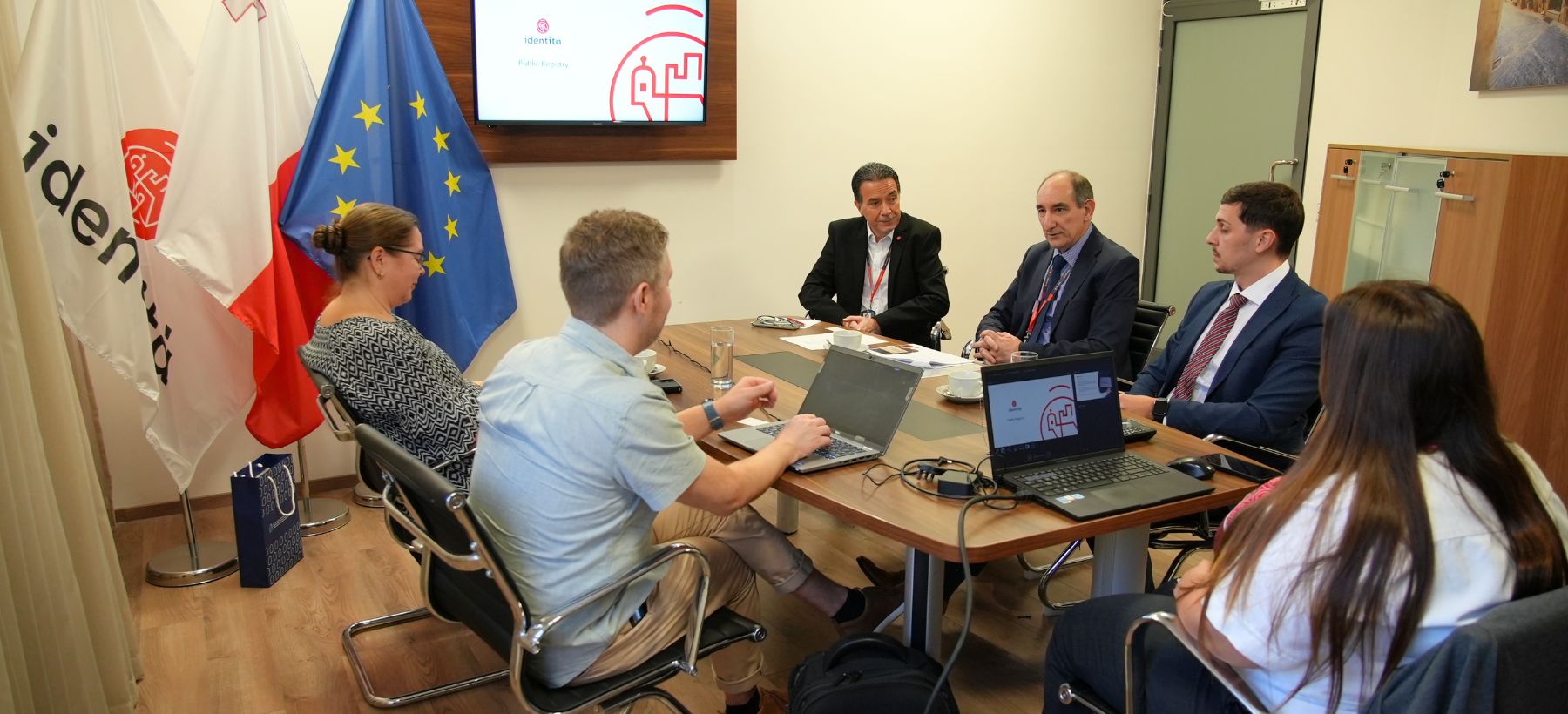
On 12th November 2025, the Public Registry within Identità welcomed representatives from Finland’s Digital and Population Data Services Agency, following an earlier exchange in January 2025. The visit aimed to share best practices, explore service delivery models, and identify opportunities for collaboration in civil registration and digital transformation. During the discussions, the Malta Public […]