
Malta continues to attract professionals across multiple sectors, increasing the importance of clear, well-structured migration and residence frameworks. This growth raises key operational considerations, including the appropriate application pathways, common causes of processing delays, and the role Identità plays in ensuring that visa and residence procedures are administered efficiently, securely, and in line with national […]
Malta continues to attract professionals across multiple sectors, increasing the importance of clear, well-structured migration and residence frameworks. This growth raises key operational considerations, including the appropriate application pathways, common causes of processing delays, and the role Identità plays in ensuring that visa and residence procedures are administered efficiently, securely, and in line with national policy.
In a recent interview with SiGMA News, Paula Camilleri, Senior Manager at Identità’s Central Visa Unit, and Ayrton Hayman, Executive Officer within the Expatriates Unit, talked through the steps that most non-EU nationals and their employers need to understand, especially when timelines are tight, and onboarding depends on getting the paperwork right.
Long-stay visas and how applications are handled
For third-country nationals planning to stay in Malta beyond the short-term threshold of 90 days, the national long-stay visa represents a fundamental entry requirement. As Camilleri explains, Identità’s role is to assess and issue national long-stay visas following the completion of all due diligence and security checks.
She further notes that applications may be submitted through an assisted channel, with applicants able to apply via VFS Global through Identità’s extended service.
Camilleri also describes the practical flow many applicants follow once they start online: “Once an applicant submits an application online through Identità’s website, they are required to present the relevant documentation and pay the applicable fee, after which Identità proceeds with processing and finalising the application.”
Work permits and residence: what speeds things up, and what holds it back
Identità is responsible for supporting the employment-related migration of non-EU nationals. As Ayrton states, “Our role is to make the transition as smooth as possible.”
For most applicants, he says the “standard route is the single work permit, which authorises an applicant to live and work in Malta,” and he points out that employers can apply while the applicant is still abroad.
When it comes to avoiding delays, Ayrton is direct about the usual culprits: “One of the most common issues is inconsistencies and incomplete documentation,” and even small mismatches can stop an application in its tracks: “The details do not match. That would obviously delay the process.”
Timing matters too. Ayrton notes that when Identità issues a biometrics invitation, “the appointments are available within 24 hours,” but delays can happen if “the applicant chooses a later slot.”
His advice is practical: “Follow the checklists, submit required documentation, submit renewals early, and respond quickly to requests for information.”
Supporting fast-growing employers
For companies hiring at pace, Ayrton says Identità focuses on keeping processes clear and manageable at scale: “For day-to-day recruitment, we have the single permit route. We assist HR teams with online applications, live status tracking, and direct communication channels.”
And for senior or specialised roles, he highlights accelerated schemes: “We offer the Key Employee Initiative and the Specialist Employee Initiative, which offer shorter timeframes and lead to quicker onboarding.”
His closing point reflects the bigger aim: “Our aim is to remove any uncertainties, offer transparency, and make Malta an easier place for global talent to settle.”

A new course has been introduced for third-country nationals already in Malta, focusing on Maltese culture and the Maltese language. The syllabus for this course was prepared by the Ministry for Home Affairs, Security and Employment, and it will be available to be offered by all licensed Maltese educational institutions. This course, for which […]

Identità would like to inform employers, prospective applicants, and current clients that, as from 1 March 2026, the Pre-Departure Course certificate will be formally verified as part of the work permit application process for new and still abroad third-country nationals (TCNs). The Pre-Departure Course was officially launched on 5 January 2026 and forms part of […]
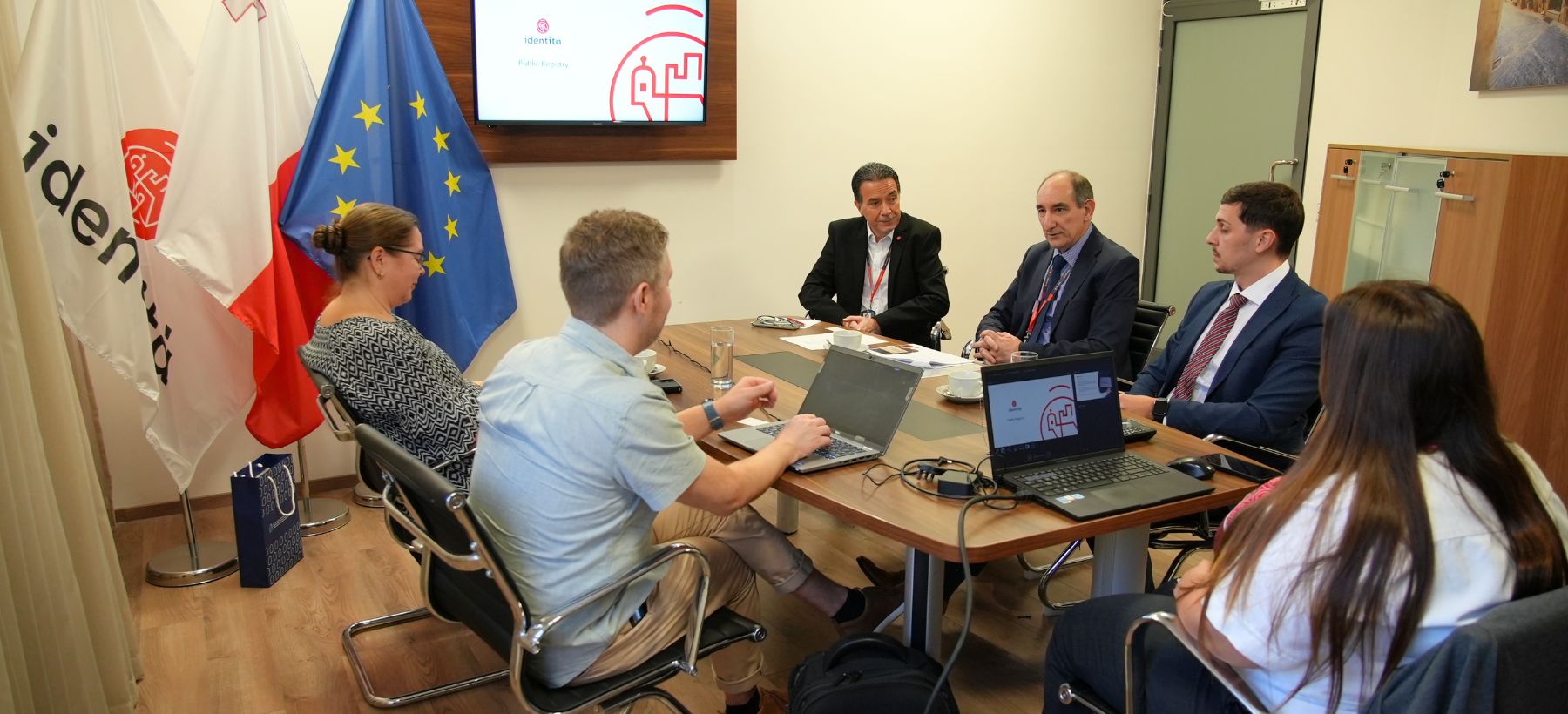
On 12th November 2025, the Public Registry within Identità welcomed representatives from Finland’s Digital and Population Data Services Agency, following an earlier exchange in January 2025. The visit aimed to share best practices, explore service delivery models, and identify opportunities for collaboration in civil registration and digital transformation. During the discussions, the Malta Public […]